Why Engine Stalls: Causes You Should Check
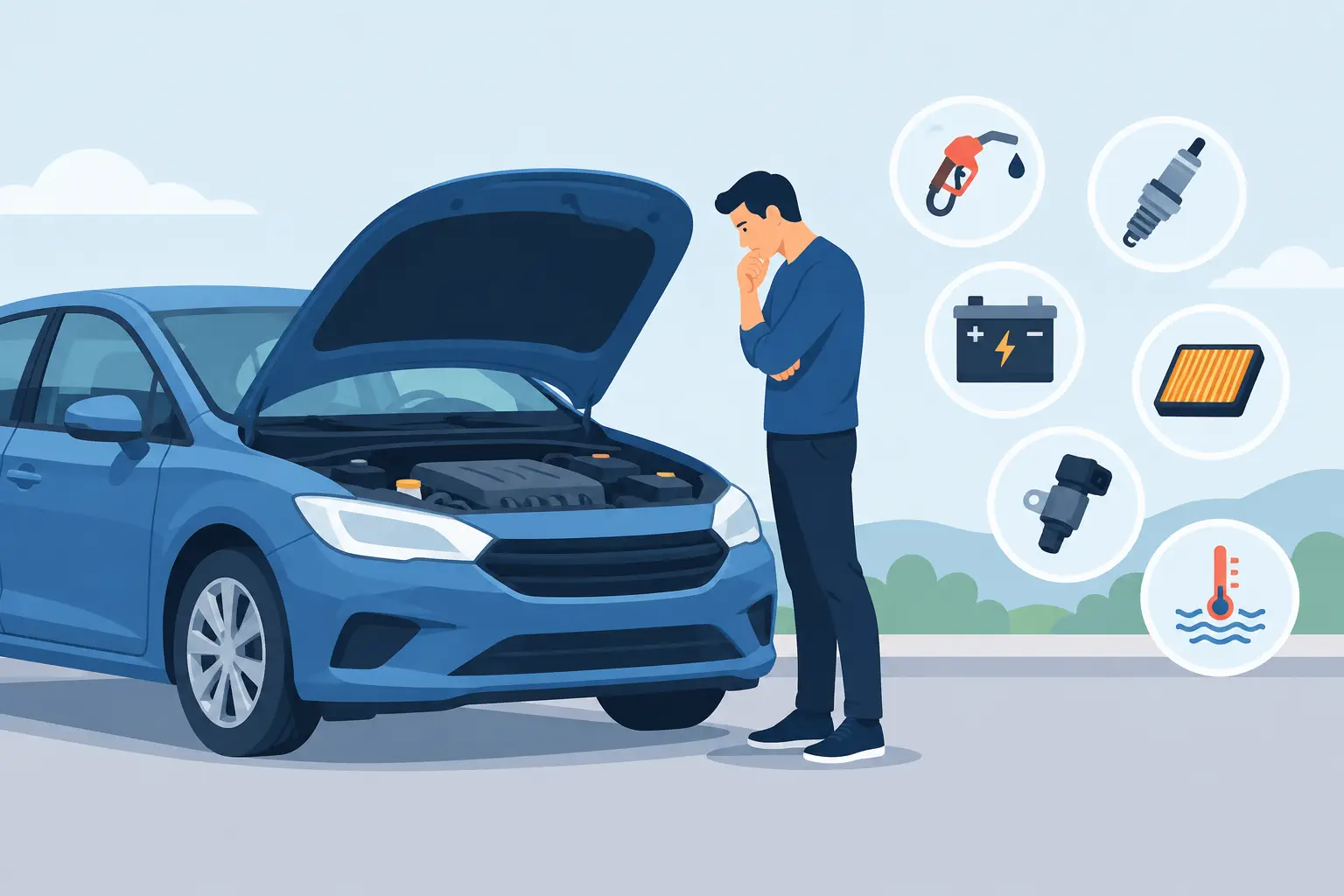
A stall at a stoplight is more than an inconvenience when traffic is moving around you. If you are asking why engine stalls happen in your vehicle, the answer is usually not one universal failed part. An engine needs the correct balance of air, fuel, spark, compression, and electronic control to keep running. A problem in any one of those areas can interrupt combustion and shut the engine off.
The pattern matters. An engine that stalls only when cold points technicians in a different direction than one that dies after warming up, under acceleration, or while idling in gear. Paying attention to the conditions around the stall helps turn a frustrating symptom into a precise diagnosis.
Why Engine Stalls at Idle or on the Road
At idle, the engine runs at low speed with very little margin for error. The vehicle's computer must accurately manage airflow, fuel delivery, and ignition timing while accessories such as the air conditioner, headlights, and power steering place additional load on the engine. A small issue that is barely noticeable at highway speed can become enough to cause a stall at a red light.
A stall while driving is more urgent. Loss of engine power can reduce power steering assist and brake assist, although the brakes and steering still function with more effort. Safely move off the road, turn on hazard lights, and avoid repeatedly trying to restart the vehicle in traffic if it continues to die. A vehicle that stalls at speed deserves prompt professional inspection.
The first question is whether the engine restarts immediately. A quick restart may suggest an intermittent sensor, air leak, idle-control concern, or fuel-delivery issue. A long crank or no-start condition after the stall can point toward loss of fuel pressure, ignition spark, battery voltage, or crankshaft position information.
Fuel Delivery Problems
Combustion cannot continue without consistent fuel pressure and the right amount of fuel entering each cylinder. A weak fuel pump, restricted fuel filter where applicable, failing fuel-pressure regulator, contaminated fuel, or clogged injector can all lead to a rough idle, hesitation, reduced power, and stalling.
Modern vehicles do not always give a clear warning before a fuel pump begins to fail. Some will stumble during acceleration, lose power on hills, or stall once the engine is hot and restart after sitting for several minutes. Others may start normally in the morning but die after driving long enough for the failing pump or electrical connection to heat up.
Fuel-related symptoms can overlap with many other faults. Replacing a pump based only on a complaint of stalling is not disciplined repair. A proper diagnosis checks actual fuel pressure, volume when appropriate, electrical power and ground at the pump, and scan-tool data before recommending parts.
Unmetered Air and Idle Airflow Issues
The engine control module calculates fuel delivery based partly on the air entering the engine. If cracked intake tubing, a loose hose, a worn gasket, or another vacuum leak allows air in after the mass airflow sensor, the computer may not add enough fuel. The result can be a lean condition, rough idle, high idle, hesitation, or stalling.
Carbon buildup around the throttle body is another common cause, particularly on vehicles that spend a lot of time in stop-and-go driving. When the throttle plate is nearly closed at idle, buildup can restrict the small amount of airflow the engine needs. The engine may start and run when the accelerator is pressed but stall when you release the pedal.
Some older vehicles use a separate idle air control valve, while many newer vehicles use an electronically controlled throttle body. The repair is not automatically the same in every case. Cleaning may help when deposits are the issue, but a failed actuator, damaged wiring, or an incorrect relearn procedure may require a different repair.
Spark, Sensors, and Electrical Faults
A worn spark plug, failing ignition coil, damaged coil boot, or wiring problem can cause a misfire severe enough to stall the engine. Often, the driver notices shaking, a flashing check engine light, or a lack of power before the engine dies. Continuing to drive with an active misfire can damage the catalytic converter, which turns a relatively contained repair into a more expensive one.
Several sensors also provide information the engine computer cannot operate without. The crankshaft position sensor, for example, tells the computer engine speed and crankshaft position. If that signal drops out, the computer may stop firing the injectors or ignition coils. A camshaft position sensor, mass airflow sensor, throttle position sensor, coolant-temperature sensor, or manifold-pressure sensor can also contribute to stalling when readings are inaccurate or intermittent.
Electrical diagnosis takes more than reading a trouble code. A code identifies a system or condition that needs testing; it does not automatically prove which part has failed. A technician should review freeze-frame data, inspect connector condition, verify power and ground circuits, and compare live sensor data against expected operation. That is how a repair stays focused on evidence instead of guesswork.
Charging-System and Battery Concerns
An engine can stall because the vehicle loses the electrical power needed to operate ignition, fuel injection, and engine controls. A weak alternator may not keep the battery charged, especially with the blower motor, headlights, rear defroster, and other accessories running. Warning signs can include a battery light, dimming lights, slow power windows, or multiple warning lights appearing before the stall.
Loose battery terminals, corroded connections, poor engine grounds, and damaged wiring can create similar symptoms. In some cases, a battery that tests acceptable at rest still has a connection issue that causes voltage to drop while driving. Voltage-drop testing and charging-system tests are more useful than simply installing a new battery and hoping the concern goes away.
Mechanical and Transmission-Related Causes
Not every stall begins with fuel, air, or spark. Low compression, incorrect valve timing, a stretched timing component, or an internal engine problem can prevent stable combustion. These issues may be accompanied by hard starting, persistent misfires, unusual engine noise, oil consumption, or poor performance.
Automatic-transmission problems can also make an engine stall as the vehicle comes to a stop. If the torque converter clutch remains applied when it should release, it can feel like trying to stop a manual-transmission vehicle without pressing the clutch pedal. The vehicle may run well at speed but shudder and die as it slows. Scan data, transmission operation, and fault codes help separate this concern from a true engine-idle problem.
What to Notice Before Your Appointment
A clear description saves diagnostic time and helps prevent unnecessary repairs. Note whether the engine stalls when cold or warm, at idle or while moving, with the air conditioner on, after refueling, during turns, or when coming to a stop. Also note any warning lights, unusual smells, shaking, clicking noises, long cranking, or changes in fuel economy.
If the check engine light is on, avoid clearing it before the vehicle is inspected unless there is a safety reason to do so. Stored codes and freeze-frame information can show the conditions present when the fault occurred. That information is valuable, even when the light later turns off.
Do not assume an oil change, tune-up, fuel additive, or a single replacement part will solve every stalling concern. Routine maintenance supports reliability, but intermittent stalling requires a measured process: verify the complaint, inspect the vehicle, test the relevant systems, explain the findings, and provide an estimate based on what the tests show.
When an engine stalls once, it may be an early warning. When it stalls repeatedly, while turning, or in traffic, treat it as a safety and reliability concern rather than something to watch indefinitely. The Auto Guy LLC can evaluate the symptoms with professional scan tools and hands-on testing, then give you a clear explanation of what the vehicle needs and why.
Comments