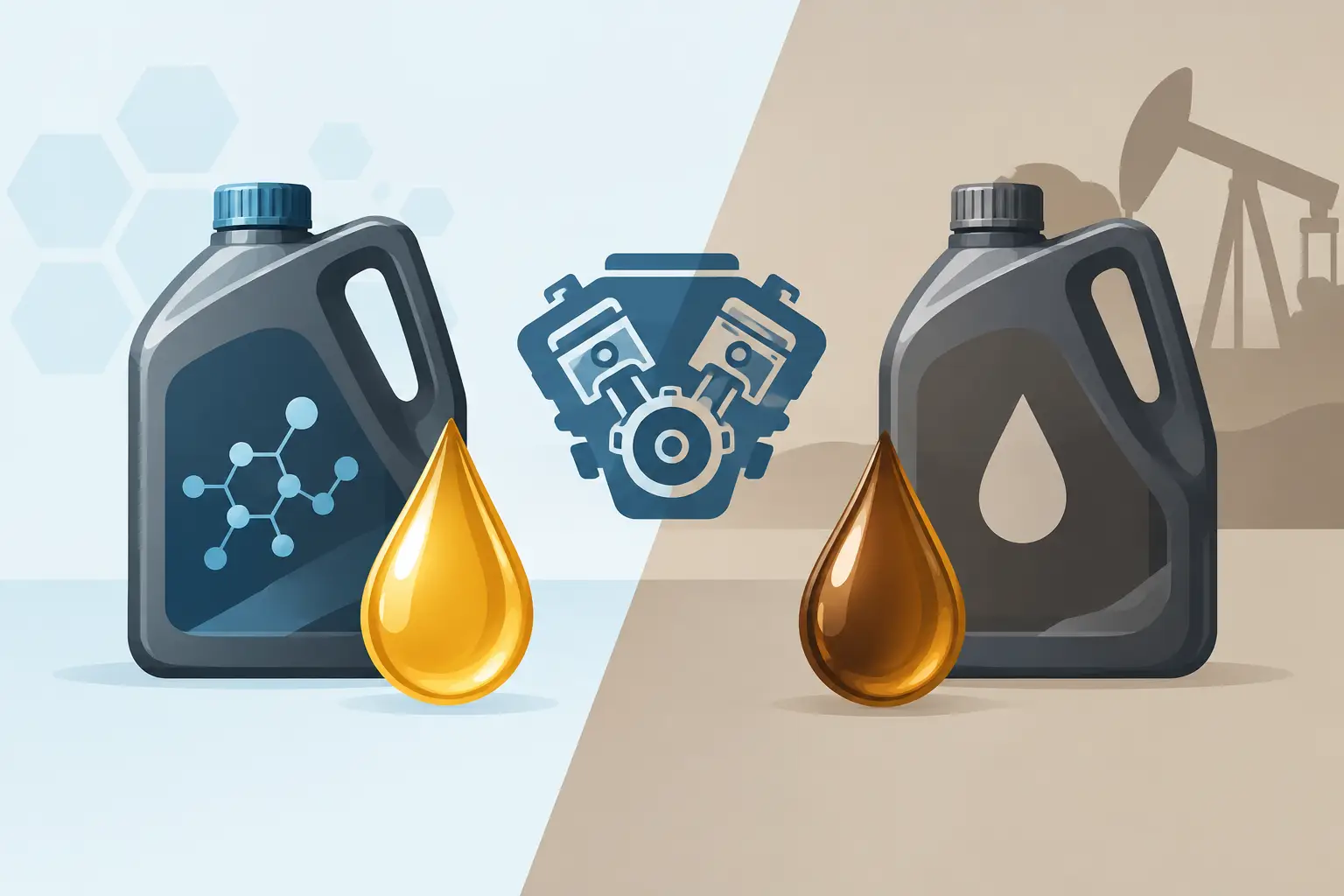
Synthetic Versus Conventional Motor Oil Explained
A low oil-change price can look appealing until the wrong oil leaves an engine less protected during a hot Oklahoma summer, a cold morning start, or a long highway commute. The choice between synthetic versus conventional motor oil is not about buying the most expensive bottle on the shelf. It is about using an oil that meets your engine’s requirements and fits how you actually drive.
For some vehicles, conventional oil remains a practical, reliable option. For others, full synthetic is the clear choice because of factory specifications, turbocharging, severe driving conditions, or extended service intervals. The right answer comes from the vehicle, the oil specification, and a clear assessment of its condition.
Synthetic Versus Conventional Motor Oil: What Changes?
All engine oil has the same core job: it lubricates moving parts, carries heat away from critical components, helps control deposits, protects metal surfaces from corrosion, and supports hydraulic systems such as variable valve timing. If oil breaks down, gets too dirty, or lacks the protection an engine needs, wear can accelerate long before a driver hears a noise or sees a warning light.
Conventional motor oil is refined from crude oil. Modern conventional oils include detergent, anti-wear, dispersant, and viscosity-control additives that make them far more capable than oils used decades ago. In the right application, quality conventional oil can protect an engine very well.
Synthetic motor oil starts with more highly refined, engineered base oils. Its molecules are more uniform, which helps the oil flow predictably across a wider temperature range. Synthetic oil also generally resists oxidation, evaporation, and viscosity breakdown better than conventional oil. That extra stability is why many newer vehicles specify it.
A synthetic blend sits between the two. It combines conventional and synthetic base oils, usually at a lower cost than full synthetic. A blend may be a reasonable option for certain engines, but it is not automatically equivalent to full synthetic. The bottle still needs to meet the viscosity grade and service specification listed by the vehicle manufacturer.
Where Full Synthetic Oil Earns Its Cost
The most noticeable advantage of synthetic oil often happens before the engine fully warms up. Oil thickens in cold temperatures, and the faster it reaches upper engine components during startup, the sooner those parts receive full lubrication. Synthetic oil typically flows better in cold conditions than conventional oil of the same grade.
It also holds up well under high heat. Stop-and-go traffic, towing, steep grades, extended idling, and summer temperatures all add heat to an engine and its oil. Turbocharged engines are especially demanding because the turbocharger operates at extremely high speed and temperature. Synthetic oil’s resistance to breakdown can provide a meaningful margin of protection in those conditions.
Deposit control is another reason synthetic oil may be worthwhile. Engines with tight internal tolerances, turbochargers, direct fuel injection, and variable valve timing depend on clean oil passages and precise oil flow. Sludge or varnish buildup can interfere with those systems. Oil alone cannot fix a neglected engine, but using the correct oil and changing it on time helps reduce the conditions that create damaging deposits.
That does not mean every older naturally aspirated engine needs full synthetic oil to survive. Many were designed around conventional oil and can continue to perform reliably with it, provided the oil meets current service standards and is changed at the proper interval.
Cost, Oil-Change Intervals, and the Fine Print
Synthetic oil costs more per oil change. That part is straightforward. The more useful question is whether it can lower the long-term cost of ownership by improving protection or allowing a longer manufacturer-approved interval.
Sometimes it can. Many late-model vehicles specify full synthetic oil and have maintenance schedules built around it. In that case, choosing conventional oil to save money is not a real savings. It may fail to meet the manufacturer’s requirements and can leave the engine with less protection than intended.
However, synthetic oil does not give every vehicle permission to go longer between oil changes. The oil-change interval should come from the owner’s manual or the vehicle’s oil-life monitoring system, not a generic claim printed on an oil container. Time matters too. A vehicle that only travels a few thousand miles a year may still need an oil change because moisture, fuel dilution, and contaminants accumulate in the crankcase.
Short trips deserve special attention. If a vehicle is frequently driven only a few miles at a time, the engine may not reach operating temperature long enough to evaporate moisture and fuel vapors from the oil. That is considered severe service on many maintenance schedules, even if the odometer mileage stays low.
When Conventional Oil Still Makes Sense
Conventional oil can be a sound choice for an older vehicle with a manufacturer recommendation that allows it, a healthy engine, and a normal maintenance schedule. It can also make sense for drivers who change their oil regularly and do not tow, haul, race, or spend hours in heavy traffic.
The key word is allows. The owner’s manual should specify the correct viscosity, such as 0W-20 or 5W-30, along with performance standards such as API, ILSAC, dexos, or a manufacturer-specific approval. Viscosity alone is not enough. Two oils may share a viscosity grade while offering different approvals and additive packages.
Conventional oil is not inferior by default, and synthetic oil is not a cure for mechanical problems. If an engine has low oil pressure, internal wear, a fuel-system issue, coolant contamination, or an active oil leak, changing oil types will not address the underlying cause. A proper inspection should come before assuming the oil is the problem.
Choosing the Right Oil for Your Vehicle
The decision usually becomes clear when a few practical details are considered. Start with the manufacturer’s requirement, then consider the engine’s design, mileage, condition, and driving pattern.
Full synthetic is usually the better fit when the manufacturer requires it, when the vehicle has a turbocharged engine, or when it faces demanding service such as towing, frequent short trips, heavy traffic, high temperatures, or extended highway use. It is also often the sensible choice for drivers who want the strongest available protection within the approved maintenance plan.
Conventional oil may be appropriate when the manual permits it and the vehicle sees normal use with consistent maintenance. A synthetic blend may work for an engine that approves it, but it should be selected based on specification rather than marketing language.
High-mileage oil is another category that can help in certain situations. These oils often contain seal conditioners and additive packages intended for engines with higher mileage. They may reduce minor seepage or oil consumption in some vehicles, but they will not repair a failed gasket, worn piston rings, or a damaged valve seal. If a vehicle is losing oil, identifying where it is going is more valuable than simply switching products.
Does Switching to Synthetic Cause Leaks?
A common concern is that synthetic oil causes leaks in older engines. In most cases, synthetic oil does not create a leak where no issue existed. What can happen is that an engine with brittle seals, existing sludge, or marginal gaskets begins showing a leak that was already developing.
Switching from conventional to synthetic is generally safe when the synthetic oil has the proper viscosity and approvals for the engine. Still, a vehicle with significant sludge, known oil leaks, unusual consumption, or an uncertain maintenance history may benefit from a professional assessment first. The goal is not to avoid synthetic oil without reason. It is to make an informed choice based on the engine in front of you.
The Oil Filter Matters Too
Oil quality and filter quality work together. The filter captures contaminants that circulate through the lubrication system, while the oil carries those contaminants toward the filter and keeps internal surfaces protected. A low-quality filter, an incorrect filter, or a damaged filter seal can undermine an otherwise proper oil service.
A complete oil change should include confirming the correct oil grade and specification, replacing the filter, checking for visible leaks, inspecting the drain plug and sealing surface, and verifying the oil level after the engine has run. These are small details, but they are the details that protect reliability between visits.
At The Auto Guy LLC, the recommendation should be based on your manufacturer requirements, driving conditions, and the condition of your vehicle, not on a one-size-fits-all sales pitch. If you are unsure what your engine needs, bring the owner’s manual information and any concerns about oil use, leaks, warning lights, or engine noise. A clear answer before the service is always better than guessing after it.
Comments