Dealer Versus Independent Mechanic: Which Is Best?
A warning light comes on during your commute. Your brakes begin to squeal. The transmission hesitates leaving a stoplight. When your vehicle needs attention, the dealer versus independent mechanic decision can feel less like a choice and more like a gamble. Both can provide quality work, but the right answer depends on the vehicle, the repair, your warranty status, and how clearly the shop can explain what it found.
The most reliable repair experience is not automatically tied to a dealership logo or the lowest estimate. It comes from accurate diagnosis, documented recommendations, qualified technicians, quality parts, and a repair plan that makes sense for the condition of your vehicle.
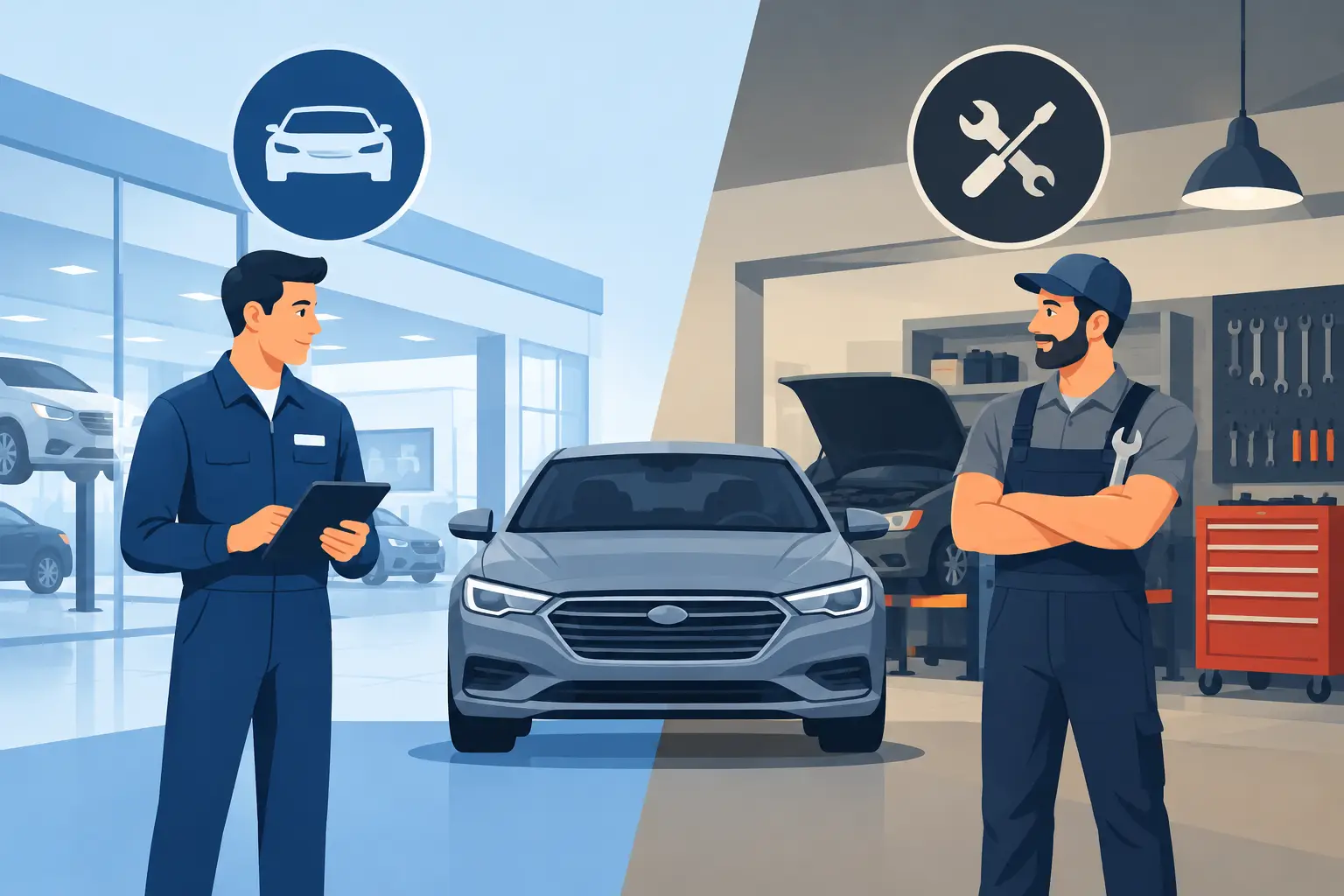
Dealer Versus Independent Mechanic: The Main Difference
A dealership service department is connected to a specific vehicle manufacturer. Its technicians work primarily on that brand, use factory service information, and often have direct access to manufacturer-specific training, tools, software updates, and warranty processes. For certain concerns, especially on newer vehicles, that access can be valuable.
An independent repair shop serves many makes and models. A well-equipped independent shop invests in professional scan tools, repair information, measurement equipment, and technician training so it can diagnose and repair a wide range of vehicles. Its advantage is often a more personal service process, flexible parts options, and labor rates that may be lower than a dealership's.
Neither model guarantees good work by itself. A dealership can misdiagnose a problem or recommend work without enough explanation. An independent shop can also fall short if it lacks the right equipment or experience for a specialized repair. The better question is: who has the tools, information, and accountability to solve this specific problem correctly?
When a Dealership May Be the Better Choice
Dealership service can make sense when your vehicle is under its original factory warranty or an extended manufacturer-backed warranty. Covered repairs frequently need to be handled through an authorized dealer, and the dealer can confirm coverage before work begins. This is especially relevant for major powertrain, emissions, hybrid, or electric vehicle components.
A dealer may also be the practical choice for open safety recalls and certain manufacturer service campaigns. Recall repairs are generally completed at no cost to the owner, provided the vehicle qualifies. Manufacturer software updates, key programming, module coding, and highly brand-specific electronic concerns may also require factory-level equipment or direct access to the manufacturer's system.
For a very new vehicle with an unusual drivability issue, the dealer may have access to technical bulletins or known-pattern information that shortens the diagnostic process. That does not mean every warning light belongs at a dealership. It means the factory connection can be useful when a concern is closely tied to manufacturer software, warranty coverage, or a specialized system.
Where an Independent Shop Often Delivers More Value
For routine maintenance and many common repairs, an independent mechanic can be an excellent fit. Oil and filter changes, brake repairs, suspension work, batteries, alternators, cooling-system repairs, engine diagnostics, and transmission service do not automatically require dealership service.
Independent shops often have more flexibility in how they approach a repair. They may offer original-equipment, aftermarket, or upgraded parts when appropriate, then explain the difference in price, warranty, and expected service life. That gives the customer a real choice instead of a single package with little context.
There is also a practical relationship benefit. At a local shop, the person discussing the concern may be closer to the actual inspection and repair process. That can make it easier to ask questions, review findings, and understand what needs immediate attention versus what can be monitored. For drivers keeping a vehicle long after the factory warranty ends, that continuity matters.
At The Auto Guy LLC, the goal is not to sell a repair category. It is to identify the cause of the concern, show the customer what supports the recommendation, and protect the vehicle's long-term reliability with precise work.
Cost Is More Than the Initial Estimate
Labor rates are often one of the first differences customers notice. Dealership overhead can be higher because of facility costs, manufacturer requirements, specialized tools, and brand-specific training. Independent shops may have lower labor rates, though that varies by location, vehicle type, and repair complexity.
Parts pricing can differ as well. A dealer commonly uses manufacturer-branded parts. Those parts may be the best choice for certain components, particularly electronics, sensors, fit-sensitive body parts, or systems where quality variations can create repeat failures. But manufacturer packaging is not the only source of quality. Many original equipment suppliers sell equivalent parts through professional aftermarket channels.
The lowest estimate is not always the least expensive repair. A cheap diagnosis that misses the actual failure can lead to unnecessary parts, repeat visits, and more downtime. Ask what testing was performed, what evidence supports the recommendation, and whether the estimate includes all expected parts, labor, fluids, taxes, and shop supplies. Transparent pricing should not require guesswork.
Diagnostics Matter More Than Brand Names
Modern vehicles are computer networks on wheels. A scan tool can read a fault code, but a code is often a starting point, not a final answer. A code related to an oxygen sensor, for example, does not prove the sensor itself has failed. Wiring damage, an exhaust leak, fuel-delivery issues, or engine performance problems can produce related codes.
A proper diagnosis may include scan data, visual inspection, electrical testing, pressure testing, road testing, technical service information, and confirmation after repair. The exact process depends on the symptom. Brake noise needs a different inspection than a no-start condition. A vibration at highway speed requires a different approach than a rough idle at a stop.
When comparing a dealer versus independent mechanic, ask how the shop diagnoses concerns rather than simply asking whether it has a scanner. A professional shop should be able to explain the test results in plain language. If a recommendation is based on a visible leak, worn brake pad measurement, failed charging-system test, or stored data supported by additional testing, you should know that.
Maintenance Does Not Have to Be Done at the Dealer
Many drivers believe dealership service is required to keep a factory warranty valid. In most cases, routine maintenance can be performed by a qualified independent shop, provided the service follows the manufacturer's schedule and suitable parts and fluids are used. Keep itemized records showing the date, mileage, work performed, and products installed.
That said, maintenance schedules deserve careful reading. Some vehicles have specific fluid standards, inspection requirements, or service intervals based on severe driving conditions. Oklahoma heat, dusty roads, frequent short trips, towing, and stop-and-go driving can all affect maintenance needs. A shop should recommend service based on your vehicle, mileage, driving habits, and manufacturer guidance - not a one-size-fits-all menu.
Be cautious when someone recommends a long list of flushes or treatments without showing why they are needed. Preventive maintenance is valuable when it is timely and supported by the vehicle's condition and service schedule. It becomes expensive noise when it is sold without evidence.
Questions That Help You Choose With Confidence
Before authorizing work, focus on clarity. Ask whether the repair is urgent for safety or reliability, what symptoms or test results point to the failed component, and what could happen if you wait. Ask whether there are parts options and whether the quoted price includes diagnosis, labor, parts, fluids, and any additional fees.
For larger repairs, also ask about the warranty on parts and labor. A warranty matters, but so does the shop's willingness to stand behind the diagnosis if the original concern remains. Good communication before the repair is often a strong indicator of how a shop will handle questions afterward.
If the vehicle is under warranty, has an open recall, or needs factory programming, start by checking with the dealer. If it needs maintenance, brakes, electrical testing, drivability diagnosis, or a repair on an out-of-warranty vehicle, a capable independent shop may provide the same level of technical care with more direct communication and better value.
Your vehicle does not need a sales pitch when something goes wrong. It needs a careful inspection, an honest explanation, and repair work that gives you confidence the next time you turn the key.
Comments